
Where to Buy Verified and Cheap PUBG Accounts: A Comprehensive Guide to PUBG Account Trading and Marketplaces
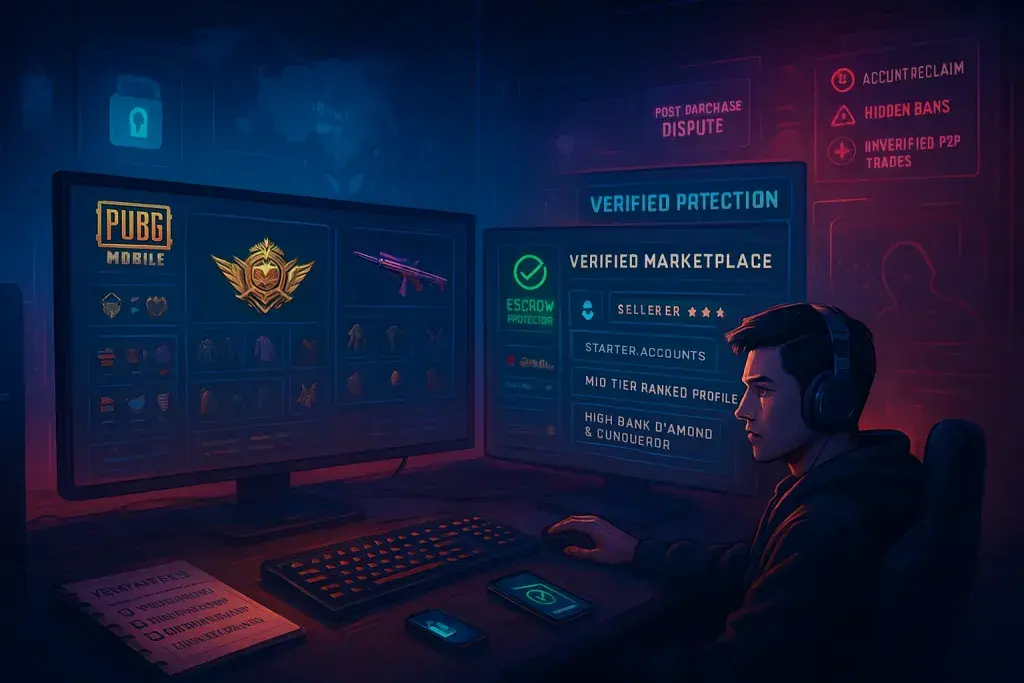
Authored by promoverspittsburgh.com, 28 Feb 2026
Most players assume the only way to build a strong PUBG Mobile profile is to earn it - match by match, season by season. The reality is that a well-functioning secondary market exists for exactly this purpose, and millions of account transactions take place across dedicated platforms every year. Whether you've lost access to an old account, want to compete at a higher tier without the grind, or simply want a profile stacked with rare cosmetics, buying an existing account is a practical and widely used option.
The challenge isn't finding accounts - it's finding the right ones at a fair price without getting burned. Marketplaces vary enormously in terms of safety, inventory quality, and pricing transparency. Knowing where to look matters as much as knowing what to look for. Platforms that list pubg accounts for sale range from fully regulated marketplaces with escrow systems to informal social media groups where there's no recourse if something goes wrong.
This guide covers every aspect of the process: how the trading market is structured, what verified accounts actually means in practice, how to compare platforms effectively, where to find genuinely cheap PUBG accounts without sacrificing security, and how to complete a purchase without exposing yourself to the most common risks. By the end, you'll have a clear, working framework for making a confident and informed decision.
Understanding PUBG Account Trading: How the Market Works
The secondary market for PUBG Mobile accounts functions much like any other resale economy - supply is driven by players who no longer use their accounts, and demand comes from players who want to skip early progression or access specific in-game assets. What distinguishes this market from casual item trading is that what changes hands isn't a single item but an entire profile: rank history, cosmetic inventory, linked credentials, and gameplay statistics all transfer together.
Sellers enter the market for straightforward reasons. Some quit the game permanently and prefer to recover some value from the time they invested. Others switch regions, create new profiles, or upgrade to a different device setup that requires a fresh account. The result is a steady, organic supply of legitimate listings across multiple platforms at any given time.
Transactions typically involve the handover of login credentials - the email address and password tied to the account, along with any linked social profiles that control access. The completeness of this handover is one of the most important factors in determining whether a purchase is safe. Partial transfers, where the original owner retains access through a linked recovery option, are a leading cause of post-purchase account loss.
PUBG account trading has become a structured activity, not a fringe one. Dedicated platforms process large volumes of transactions daily, with pricing tiers, category filters, and buyer protection mechanisms that resemble mainstream e-commerce more than informal bartering.
Types of PUBG Accounts Available on the Market
Account listings fall into several well-defined categories, and identifying which type matches your goals is the first practical step toward a good purchase. Mixing up categories - paying for a cosmetic-rich account when competitive rank is what you need, for example - is a surprisingly common and avoidable mistake.
- Starter accounts - Low-level profiles with minimal progression, useful for players who want to begin on a different server or device without sitting through tutorials and early matchmaking.
- Mid-tier ranked accounts - Accounts that have reached Gold or Platinum competitive rank, offering a solid baseline for players who want to skip the lower brackets without paying premium prices.
- High-rank accounts - Diamond, Crown, and Conqueror-tier profiles that represent the top tier of competitive play and carry the highest price points accordingly.
- Cosmetic-rich accounts - Profiles built around rare outfits, weapon skins, and limited-edition season pass rewards, appealing primarily to players who prioritize aesthetics and customization.
- Veteran accounts - Older profiles with long playtime histories and legacy items that are no longer obtainable through current gameplay, valued for their rarity and irreproducibility.
Most buyers fit clearly into one or two of these categories once they've thought through their actual priorities. A player returning after a long absence who wants to stay competitive has different needs than a collector chasing discontinued cosmetics, and the pricing structures across these categories reflect those differences.
Why Players Choose to Buy Rather Than Grind
Time is the most consistent driver. Reaching Diamond or Conqueror rank in PUBG Mobile requires not just hours but consistent, focused play over multiple seasons. For working adults, casual players, or anyone returning after a break, that investment simply isn't feasible within a reasonable timeframe.
Region access is another factor. PUBG Mobile's server architecture means that some cosmetics, seasonal events, and matchmaking pools are region-specific. A player who moved countries or wants to experience a different server environment may find that buying an account native to that region is easier than rebuilding one from scratch.
Account recovery is a third scenario. Players who lost access to their original account through forgotten credentials, linked email loss, or device changes often find that buying a replacement is faster and less frustrating than pursuing official support channels, which can be slow and unpredictable.
What Makes a PUBG Account "Verified" - and Why It Matters
The word "verified" appears frequently in account listings, but sellers use it inconsistently. In some cases it describes a genuine, multi-step platform review process. In others, it's a marketing label with no specific backing. Understanding the difference between substantive verification and empty claims is one of the most valuable skills a first-time buyer can develop.
At its core, verification in the context of verified pubg accounts means that an independent check - performed by the platform, not the seller - has confirmed that the account exists as described, is accessible, has no hidden restrictions, and can be transferred cleanly to a new owner. This is fundamentally different from a seller simply asserting that their account is legitimate and attaching a few screenshots as evidence.
Key Verification Indicators to Look For
When evaluating a listing, the following indicators distinguish genuine verification from self-reported claims:
- The platform - not the seller - has independently confirmed the account's rank, level, and inventory through direct access checks rather than screenshots alone.
- All recovery options attached to the account, including linked email addresses, phone numbers, and social login connections, are confirmed transferable or removable before purchase.
- The account's ban and suspension history has been reviewed, with no active flags or pending enforcement actions.
- The marketplace offers a post-purchase guarantee window during which buyers can report discrepancies and receive a resolution, including refunds where applicable.
- The seller has a documented transaction history on the platform with a pattern of positive buyer feedback.
No verification process eliminates all risk, but platforms that perform these checks substantially reduce the likelihood of a failed transaction. The guarantee window is particularly important - an account that appears fine at login but is reclaimed by the original owner three days later is worthless without a protection policy that covers that scenario.
Risks of Buying Unverified Accounts
Unverified account purchases carry a specific and predictable set of failure modes. The most common is the reclaim: the original owner retains access through a linked recovery email or phone number and recovers the account after the sale, leaving the buyer locked out. This is especially prevalent on informal channels where there's no mechanism to audit the seller's claims before the transaction.
Hidden bans are a related risk. Some accounts carry prior warnings or temporary bans that aren't visible at login but activate within days of purchase, either through scheduled enforcement or automated detection of unusual login behavior. Without a platform guarantee that covers post-purchase bans, the buyer has no recourse.
Inaccurate descriptions are a third category of risk - accounts listed with inflated ranks, overstated cosmetic inventories, or incorrect server regions. Without independent platform verification, buyers have only the seller's word, which is a thin basis for any meaningful transaction.
The financial comparison is straightforward: paying a modest premium for a verified account on a reputable platform costs less in the long run than losing an entire unverified purchase to fraud or reclaim. The price difference between the two options is rarely large enough to justify the added risk.
Top PUBG Account Marketplaces: Comparing Your Options
The pubg account marketplace landscape divides into three broad categories: dedicated account trading platforms, peer-to-peer trading channels, and reseller websites. Each operates differently in terms of safety architecture, pricing, and transaction volume. Choosing between them isn't primarily a question of price - it's a question of how much risk you're willing to accept and how experienced you are at identifying and managing that risk.
Established Dedicated Account Marketplaces
Dedicated platforms built specifically for game account trading represent the most structured segment of the market. These platforms have built verification systems, dispute resolution processes, and reputation mechanisms into their core functionality. Sellers on these platforms build transaction histories over time, and their ratings are public, trackable, and difficult to fake at scale.
The escrow model used by most reputable platforms is a significant buyer protection: payment is held by the platform rather than transferred directly to the seller, and funds are only released once the buyer confirms successful account access. This single mechanism eliminates a large proportion of outright fraud scenarios that are common on informal channels.
Platforms in this category generally carry wider selection than informal channels, with category filters, search tools, and pricing comparisons that make it easy to identify accounts matching specific requirements. The trade-off is that platform fees - typically a percentage of the transaction - are built into listing prices. This means dedicated marketplace prices run slightly higher than peer-to-peer offers for equivalent accounts, though the security difference usually justifies the gap for most buyers.
Peer-to-Peer Trading Channels
Peer-to-peer channels - Discord servers, Reddit trading communities, and Facebook groups dedicated to account sales - operate without the safety infrastructure of dedicated platforms. Prices are often lower, direct communication with sellers is possible, and negotiation is more flexible. These surface-level advantages attract buyers, particularly those who've seen high prices on established platforms and want to cut costs.
The core problem is accountability. Without a reputation system, escrow service, or dispute resolution mechanism, buyers have very limited options if something goes wrong. Sellers on these channels can disappear after a transaction, and reclaiming payment through informal channels is practically impossible. Scams are more frequent, more sophisticated, and harder to detect without experience.
Experienced buyers who have completed multiple account transactions and know exactly what pre-purchase documentation to request may find specific value in peer-to-peer channels for niche account types. For first-time buyers or anyone purchasing a high-value account, the risk profile is too unfavorable to recommend over a dedicated platform.
Marketplace Comparison Table
| Platform Type | Typical Price Level | Buyer Protection | Verification Level | Account Selection | Risk Level |
|---|---|---|---|---|---|
| Dedicated Marketplace | Moderate to High | Yes - escrow and guarantee | High | Wide, categorized | Low |
| Peer-to-Peer (Discord/Reddit) | Low to Moderate | None or minimal | Low - seller-reported only | Variable | High |
| Social Media Groups | Low | None | None | Narrow | Very High |
| Reseller Websites | Low to Moderate | Varies by site | Varies by site | Moderate | Moderate |
How to Find Cheap PUBG Accounts Without Sacrificing Safety
Price and safety are not mutually exclusive in account trading - they operate on different axes. Cheap PUBG accounts are genuinely available on reputable platforms. The skill is knowing how to find real value rather than just seeking the lowest number on the listing page, which is the approach most likely to end in a bad transaction.
Factors That Influence PUBG Account Pricing
Account prices across the market are driven by a consistent set of factors. Understanding these makes it possible to identify listings that offer genuine value rather than accounts that are either overpriced or suspiciously cheap for reasons that aren't immediately obvious.
- Competitive rank tier - The higher the rank, the more hours were required to achieve it, and prices scale accordingly. Conqueror-tier accounts command a significant premium over Gold or Platinum-ranked profiles.
- Season history and legacy rewards - Accounts that participated in early or discontinued seasons and earned exclusive rewards are priced higher because those items can no longer be obtained through gameplay.
- Cosmetic inventory depth - A profile loaded with rare outfit sets, limited weapon finishes, and Elite Pass rewards commands more than an equivalent-ranked account with minimal cosmetics.
- Server region - Demand varies by region, and accounts on high-demand servers - particularly in Southeast Asia and South Asia - tend to be priced higher than equivalent accounts on lower-traffic servers.
- Account age and playtime - Older accounts with substantial play histories are perceived as more stable and are often priced accordingly, particularly veteran accounts with legacy items.
- Platform transaction fees - Marketplace fees, typically charged to the seller as a percentage of the sale, are factored into listing prices across all reputable platforms.
Practical Strategies for Finding Affordable Accounts
Finding genuinely cheap PUBG accounts on reputable platforms is a matter of strategy rather than luck. The following approach consistently produces better results than simply filtering by lowest price and accepting the first listing that appears.
- Define your minimum requirements before browsing - rank floor, preferred server region, and any specific cosmetics or features you actually need versus those you'd merely like to have. This prevents overpaying for inventory you don't value.
- Use marketplace filters to set a price ceiling, then sort results by seller reputation rather than price. The best-value listings are usually mid-range in price but sold by highly rated sellers with long transaction histories.
- Look for accounts that rank well but carry minimal cosmetics - these are consistently priced lower than cosmetic-heavy accounts at the same competitive tier, and they offer strong value for players focused on ranked play.
- Check whether the platform runs promotional events or seasonal sales. Many dedicated marketplaces offer temporary price reductions during major gaming events, which can make premium-tier accounts accessible at mid-tier prices.
- Compare prices for the same account type across two or three reputable platforms before committing. Price variation between platforms for equivalent accounts can be meaningful, and five minutes of comparison often yields a better deal.
Red Flags That Signal a Price Is Too Good to Be True
Certain warning signs appear consistently across fraudulent or problematic listings. Learning to recognize them prevents the most common and costly mistakes in account purchasing.
- A price that sits dramatically below the market average for equivalent accounts, with no explanation offered in the listing description.
- A seller with zero transaction history or a brand-new account on the platform, offering an unusually high-value account at the first listing.
- Listing descriptions that are vague, inconsistent, or that don't align with the screenshots provided - particularly rank displays that don't match the claimed tier.
- Any seller who insists on receiving payment outside the platform's official system, citing reasons such as "lower fees" or "faster processing."
- Listings that claim "full access" without clarifying whether recovery options - linked email, phone number, third-party login - have been removed or will be transferred.
Step-by-Step Guide to Safely Buying a PUBG Account
The transaction process for buying a PUBG account has three distinct phases, and most mistakes happen when buyers skip steps in the first or third phase. A methodical approach doesn't slow the process significantly - it takes an extra thirty minutes at most - but it eliminates the most common failure points.
Before You Buy: Preparation and Research
Pre-purchase preparation is where confident buyers separate themselves from frustrated ones. The work done before any money changes hands determines the quality of outcomes far more than anything that happens during the transaction itself.
- Clarify your actual goals before opening any platform. Are you prioritizing competitive rank, cosmetic inventory, server region, account age, or a combination? Write this down concretely - "Diamond rank, Asia server, any cosmetics" is a useful search parameter; "a good account" is not.
- Research current market prices for your target account type on at least two reputable platforms. This gives you a realistic price expectation and makes it easy to spot anomalous listings, both overpriced and suspiciously underpriced.
- Select two or three established marketplaces to search - prioritizing those with documented buyer protection policies and public seller rating systems.
- Familiarize yourself with the basics of account recovery options: understand what a linked email reclaim looks like and why an account with unremoved recovery connections is a risk regardless of how honest the seller seems.
- Read the buyer protection policy of your chosen platform carefully before committing - specifically the dispute window duration, what qualifies as a valid dispute, and what resolutions are available.
During the Purchase: What to Check Before Confirming
Once you've identified a listing that meets your requirements and passes the initial price and seller checks, a structured pre-confirmation review is the final safeguard before payment.
- Request or review video proof of live account access - not static screenshots - showing current rank, inventory contents, and active server. Video is significantly harder to manipulate than screenshots.
- Verify the seller's review history: look at the number of completed transactions, the recency of reviews, and any pattern of complaints, even resolved ones.
- Confirm explicitly that all recovery options will be transferred or removed: the original email, any linked phone number, and any third-party login connections such as Facebook or Google.
- Check the platform's dispute timeline and confirm it covers the scenario where the account is reclaimed within a specified number of days post-purchase.
- Pay exclusively through the platform's official payment system. Any request to move payment off-platform - regardless of the reason given - is a disqualifying warning sign.
After the Purchase: Securing Your New Account
The period immediately following credential handover is the most critical window for protecting your investment. Acting quickly and systematically during this phase closes the most common vectors for post-purchase account loss.
- Log in as soon as credentials are received and verify that the account contents - rank, inventory, server - match the listing description exactly before taking any other action.
- Change the account password immediately after confirming access. Use a strong, unique password not used on any other account or service.
- Update the linked email address to one you own and control. This is the single most important step in preventing reclaim by the original owner.
- Enable two-factor authentication if the platform supports it, adding a second barrier to unauthorized access.
- If any aspect of the account doesn't match the listing description, raise a formal dispute with the marketplace immediately - do not wait, and do not attempt to negotiate directly with the seller first, as this can complicate the platform's dispute process.
Legal and Policy Considerations for PUBG Account Buyers
Account trading occupies a complicated position in the PUBG Mobile ecosystem. The transaction itself - one person selling login credentials to another - is generally legal in most jurisdictions as a straightforward private sale. The complication arises from the game's own terms of service, which prohibit account transfers and sales. These are two separate and distinct categories that buyers frequently conflate.
PUBG Mobile's terms of service are a contract between the player and the developer. Violating them doesn't constitute a legal offense - it means the account can be actioned by the developer: suspended, restricted, or permanently banned. The practical enforcement risk for any given account is real but not uniform. Accounts that flag automated detection systems - typically through sudden changes in device profile, geographic location, login behavior, or playstyle pattern - are at higher risk than those that transition smoothly and are used consistently after purchase.
Buyers should factor enforcement risk proportionally into their decision. Purchasing a low-cost starter account carries a different risk calculus than investing in a high-value veteran account with rare legacy items. For the latter, the potential loss from a ban is significant enough to warrant choosing platforms with the strongest post-purchase guarantee coverage and paying close attention to account security steps after transfer.
The account trading market is active and large, and most transactions proceed without enforcement consequences. That said, no marketplace can guarantee that an account will remain active indefinitely after purchase - the developer retains the right to enforce its terms at any time. Treating a purchased account as something that carries inherent, if manageable, risk is the accurate and practical perspective.
Questions and Answers
How do I know if a PUBG account seller is trustworthy before I pay?
Check the seller's transaction history on the platform - specifically the number of completed sales, the age of their account on the marketplace, and the content of negative reviews, not just the overall rating. A seller with hundreds of completed transactions and a small number of resolved disputes is far more reliable than a new account with five five-star reviews and no transaction volume behind it.
Can the original owner reclaim a PUBG account after I've bought it?
Yes, if any recovery options - such as the original email address or a linked phone number - remain attached to the account after the sale, the previous owner can use them to initiate an account recovery through the game's official support process. This is why confirming the full transfer or removal of all recovery connections before purchase is non-negotiable, and why choosing a platform with a post-purchase guarantee window matters.
What's the safest payment method when buying a PUBG account?
Always pay through the platform's built-in payment system, which holds funds in escrow until you confirm successful account access. Never transfer money directly to a seller via bank transfer, cryptocurrency, or third-party payment apps outside the platform. Off-platform payments remove all buyer protection and make recovering funds after a failed transaction almost impossible.
Is there a meaningful difference between cheap PUBG accounts on different platforms?
Yes. The same account tier can be priced differently across platforms due to variation in fees, seller competition, and regional demand. Beyond price, the verification standards and buyer protections attached to those accounts differ significantly. A cheaper listing on a platform with no verification or dispute resolution is not comparable to a slightly higher-priced listing on a platform with escrow and a satisfaction guarantee.
What should I do if the account I received doesn't match the listing description?
File a formal dispute through the marketplace's resolution system immediately - before changing any account details or continuing to use the account, if possible. Document the discrepancy clearly with screenshots or video showing the difference between the listing and the actual account state. Acting within the platform's stated dispute window is critical; claims raised after the window closes are typically ineligible for refund or compensation.
Are veteran accounts with legacy items worth the higher price?
It depends entirely on what you value. Legacy items that are permanently removed from the game cannot be obtained any other way, which gives them genuine and lasting scarcity value for collectors and status-focused players. For players whose primary goal is competitive rank or active gameplay, paying a premium for cosmetic rarity that doesn't affect performance is rarely worth it. Clarifying your priorities before browsing prevents overspending on features that don't serve your actual goals.