
Helicopter X: Complete Controls Guide, How to Fly, and Mission Walkthrough with Gameplay Tips
Authored by promoverspittsburgh.com, 14 Jul 2026
A helicopter that drifts three degrees off course at low altitude can miss a landing pad entirely - and that single margin of error separates players who finish missions cleanly from those who restart them five times. Precision, not raw speed, is what determines whether a run in Helicopter X ends in a clean extraction or a smoking wreck. Most newcomers assume the controls are intuitive because the interface looks simple. They are not, and that gap between appearance and actual handling is where most early frustration comes from.
This guide breaks down exactly what happens between your input and the aircraft's response, why sensitivity settings matter more than most players realize, and how to read a mission before you commit to it. If you're still deciding whether the game is worth your time before tuning your settings, you can see how to play helicopter x directly and get a feel for the pacing before investing hours into practice runs. Once you understand the mechanical logic behind the controls, the rest of the learning curve flattens considerably.
What follows is a structured breakdown: control mapping, flight fundamentals, sensitivity calibration, and a walkthrough of mission types that trips up even experienced players. Nothing here is guesswork - it's built from how the flight model actually behaves under different input conditions.
Understanding Helicopter X Game Controls
Primary Input Scheme
Helicopter X uses a layered control scheme built around four core inputs: collective (vertical thrust), cyclic (directional tilt), anti-torque (yaw), and throttle modulation. On most platforms these map to a combination of directional keys or joystick axes plus dedicated buttons for altitude and rotation. The helicopter x game controls are designed to mimic real rotorcraft logic rather than arcade-style flight, which is precisely why players coming from typical flying games feel disoriented in the first few minutes.
The collective input governs lift. Push it up, and the rotor blades bite more air, sending the aircraft climbing. Pull it down, and you descend - but not instantly. There's a lag baked into the physics model that rewards anticipation over reaction.
Secondary Controls and HUD Elements
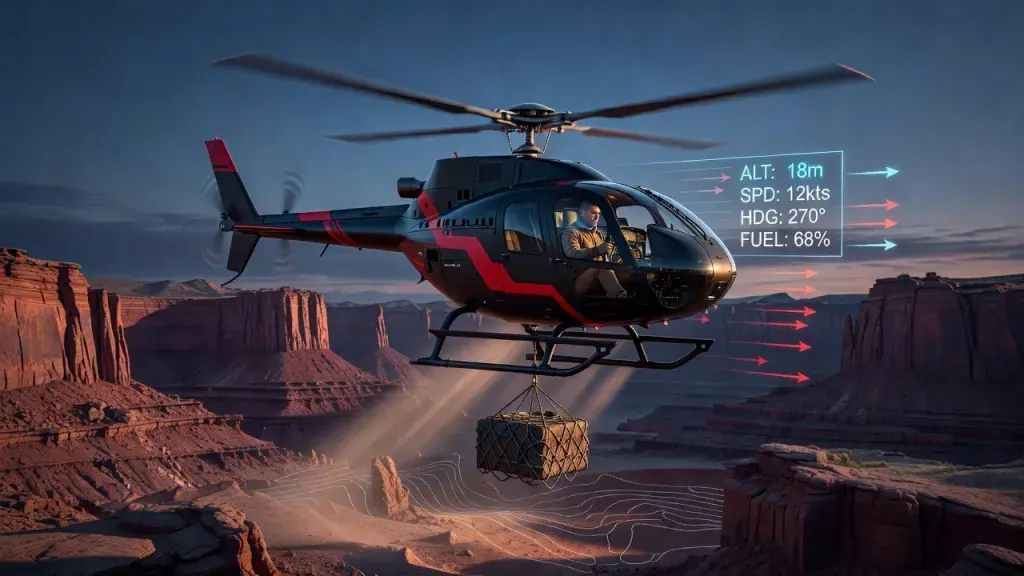
Beyond the four primary inputs, the game layers in secondary functions: landing gear toggle, external camera switch, weapon or cargo release (depending on mission type), and a stabilization assist that can be turned on or off. The heads-up display shows altitude, airspeed, heading, and fuel - all of which you need to monitor simultaneously once missions grow complex.
- Collective control - vertical lift and descent rate
- Cyclic control - forward, backward, and lateral tilt
- Anti-torque pedals or triggers - yaw and rotational alignment
- Stabilization toggle - assisted hover versus manual balance
Customizing the Control Layout
Most players never touch the default binding menu, which is a mistake. Remapping collective and cyclic to inputs that match your hand's natural resting position reduces fatigue during longer missions. If you play with a controller, consider assigning yaw to the shoulder triggers rather than the right stick - it separates rotational input from directional tilt and prevents accidental spins during tight maneuvers.
How to Fly Helicopter X: Core Flight Mechanics
Takeoff and Initial Lift-Off
Learning how to fly helicopter x starts with understanding that liftoff is not a single action but a sequence. Increase collective gradually while holding cyclic neutral. Rise too fast and the tail can swing due to torque effects; rise too slowly and you waste fuel hovering inches off the ground. The sweet spot is a steady, moderate climb to about 15-20 meters before applying any forward cyclic.
Hovering and Directional Movement
Hovering is the single hardest skill to master and the one that separates competent pilots from struggling ones. It requires constant micro-corrections on both cyclic and anti-torque inputs simultaneously. Once hovering feels stable, forward, lateral, and reverse movement become a matter of small cyclic tilts rather than large ones - overcorrection is the most common error at this stage.
Descent and Landing Precision
Landing demands the opposite instinct from takeoff: patience. Reduce collective in small increments while using cyclic to keep the aircraft level. A hard landing damages the airframe and can fail a mission outright if cargo or passengers are aboard. Practicing landings on flat, open terrain before attempting confined landing zones builds the muscle memory needed for mission-specific touchdowns.
Helicopter X Controls Sensitivity Settings Explained
Why Default Sensitivity Feels Off
The default helicopter x controls sensitivity settings are tuned for a broad audience, which means they're rarely ideal for anyone specifically. New players often find the cyclic response too twitchy, causing overcorrection loops where the helicopter oscillates instead of stabilizing. Lowering cyclic sensitivity by a modest margin - without changing collective response - usually resolves this within a single session.
Calibrating for Precision vs. Speed
There's a genuine trade-off between sensitivity and control. Higher sensitivity lets you react faster to sudden obstacles or enemy fire, but it punishes small input errors. Lower sensitivity smooths out your movements at the cost of quick reflex maneuvers. Mission type should dictate your setting: precision-landing missions favor lower sensitivity, while combat or timed-escape missions benefit from a sharper response curve.
Recommended Starting Points
- Cyclic sensitivity: start at 40-50% of maximum and adjust upward only after mastering hover stability
- Yaw sensitivity: keep slightly lower than cyclic to avoid unintentional spins
- Collective response: mid-range works for most missions; increase only for vertical-heavy maps
Adjust one axis at a time. Changing multiple sensitivity values simultaneously makes it impossible to isolate what's actually causing a handling problem.
Helicopter X Mission Walkthrough
Early Missions: Building Fundamentals
The opening missions in Helicopter X are deliberately forgiving, designed to reinforce takeoff, hover, and landing without time pressure or hostile elements. Use these to lock in your sensitivity settings before difficulty ramps up. Rushing through early missions without mastering basic control leaves gaps that resurface violently in later stages.
Mid-Game Objectives: Cargo and Rescue Runs
Mid-tier missions introduce weight-sensitive cargo transport and time-limited rescue operations. Carrying external loads changes the flight model noticeably - the helicopter becomes more sluggish and prone to pendulum swing during turns. Slow, wide turns replace the tighter maneuvers used earlier, and premature acceleration during a cargo run is the single most common cause of mission failure at this stage.
Late-Game Combat and Extraction Scenarios
Later missions combine hostile fire, tight landing windows, and environmental hazards like wind shear or low visibility. This is where a properly tuned sensitivity setup pays off - reacting to incoming threats requires faster cyclic response than earlier stages demanded. A full helicopter x mission walkthrough of these late missions typically involves memorizing enemy positions on a first attempt, then executing a cleaner run on the second.
Helicopter X Gameplay Tips for Consistent Performance
Fuel and Resource Management
Fuel consumption scales with throttle aggression, not just flight time. Hovering in place burns fuel almost as fast as forward flight, so idle time near objectives should be minimized. Planning routes that avoid unnecessary altitude changes conserves resources for missions with strict fuel budgets.
Reading Terrain and Environmental Hazards
Wind indicators and terrain elevation markers appear subtly on the HUD, and ignoring them is a common mistake among players focused solely on the mission objective marker. Crosswinds near canyon maps, for instance, push the aircraft laterally in ways that untrained pilots misinterpret as a control malfunction rather than an environmental factor.
Practice Drills That Actually Improve Skill
- Repeated hover-and-rotate drills in an open area with no objective pressure
- Timed landing challenges on progressively smaller pads
- Cargo-carrying practice runs to internalize the altered flight feel
These drills, run outside of mission context, build reflexes that transfer directly into scored gameplay.
Frequently Asked Questions
What's the fastest way to stop my helicopter from spinning uncontrollably?
Uncontrolled spinning usually comes from yaw sensitivity set too high combined with overcorrection. Lower the yaw sensitivity first, then practice small, deliberate anti-torque taps rather than holding the input down continuously.
Should I use stabilization assist or fly fully manual?
Stabilization assist is useful while learning the fundamentals, but it masks the subtle corrections needed for precision landings later. Switch it off once hovering feels comfortable, ideally before attempting mid-game cargo missions.
Why does my helicopter feel heavier during certain missions?
Cargo weight and passenger count directly affect the flight model. Missions involving external loads reduce responsiveness and increase turn radius, so adjust your flying style rather than assuming a control setting is broken.
How often should I revisit my sensitivity settings?
Reassess sensitivity whenever you notice consistent overcorrection or sluggish response in a new mission type. Combat missions and precision-landing missions often call for different settings, so having two saved profiles is a practical approach.
What causes sudden crashes right after takeoff?
This typically happens from applying too much collective too quickly, which triggers torque effects that swing the tail before the anti-torque input compensates. Slower, staged throttle increases during liftoff eliminate this almost entirely.
Is controller or keyboard better for flying in Helicopter X?
Controllers generally offer finer analog control over cyclic and collective inputs, which suits the game's realistic flight model better than the binary press-and-release nature of keyboard keys. Keyboard players can compensate with careful sensitivity tuning, but the learning curve tends to be steeper.